
Driven by the dual carbon goals and circular economy strategy, the resource utilization of waste tires has upgraded from an environmental protection task to a new blue ocean in the green industry. China generates over 300 million waste tires annually, weighing 12 million tons, but has long faced industry pain points such as “dispersed recycling, inefficient treatment, and low added value”. A large number of waste tires are randomly piled up to form “tire graveyards”, which not only occupy land resources but also may produce toxic gases and leak harmful substances due to spontaneous combustion, becoming a “black pollution” threatening the ecological environment. Traditional treatment methods mostly remain at the level of simple dismantling and indigenous pyrolysis, with a resource utilization rate of less than 50%, resulting in huge waste. Through intelligent and closed-loop technological innovation, waste tire recycling systems have realized the transformation from “extensive disposal” to “full-value utilization”, building a complete industrial chain covering recycling, processing, and application, turning the former “black burden” into a “circular gold mine” supporting the green development of the industry. This article will analyze the core competitiveness and development potential of this system from three dimensions: technological breakthroughs, industrial empowerment, and ecological value.
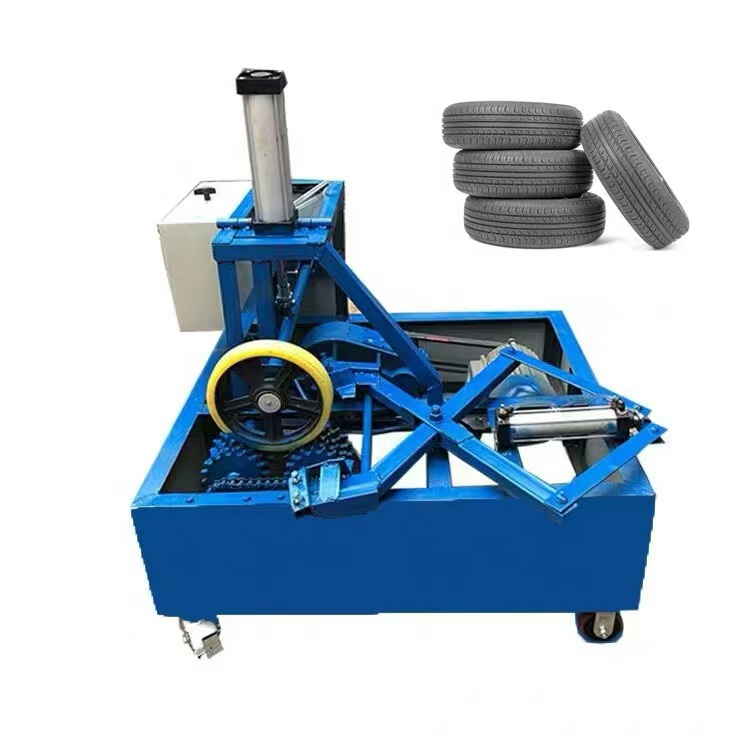
The disruptive value of waste tire recycling systems stems from the comprehensive reconstruction of traditional treatment processes. Through four key technological innovations, they have overcome the industry’s persistent problems of “difficult separation, shallow utilization, and heavy pollution” of waste tires:
Intelligent Precision Sorting Technology
To address the difficulty of completely separating rubber, steel wire, and fiber in waste tires, the system integrates multi-dimensional sorting modules. First, hydraulic shears crush tires into 2-4 inch rubber blocks, then magnetic separation equipment efficiently separates steel wire (with a recovery rate of 99.9%), and finally, air separation and vibration screening technology completely split rubber and fiber. The entire sorting process has a high degree of automation, with an efficiency 20 times higher than traditional manual dismantling and a separation purity of 99.8%, laying the foundation for subsequent high-value processing. The separated steel wire can be reused in steel production after re-smelting, and the fiber can be used as a reinforcing material for construction materials, realizing initial resource recovery.
Continuous High-Temperature Pyrolysis Technology
As the core process of the system, continuous pyrolysis technology breaks through the intermittent defects of traditional indigenous pyrolysis. It conducts deep pyrolysis of rubber blocks in an oxygen-free environment at 1022 degrees Fahrenheit, converting them into 40% tire oil, 30% carbon black, 20% steel wire, and 10% combustible gas, truly achieving “full resource utilization”. The system is equipped with precise temperature control and pressure monitoring modules to adjust reaction parameters in real time, avoiding the generation of toxic gases. The combustible gas produced by pyrolysis can be directly used as a heat source for the pyrolysis furnace after purification, realizing energy self-circulation and reducing energy consumption costs by more than 30%. Compared with traditional processes, this technology not only increases the resource conversion rate to 100% but also completely solves the waste gas and residue pollution problems caused by indigenous pyrolysis.
Carbon Black Deep Processing and Modification Technology
Breaking the limitation that traditional pyrolytic carbon black can only be used as low-grade fuel, the system adds a carbon black refining module. Through grinding, purification, modification and other processes, crude carbon black is processed into high-standard industrial carbon black such as N330 and N550. Its particle size uniformity and reinforcing performance are equivalent to virgin carbon black, which can be directly reused in tire and rubber product production, realizing a closed loop of “from tire to tire”. The market value of modified carbon black has increased from less than 1100 US dollars per ton to more than 5500 US dollars per ton, greatly improving product added value and leading the industry’s transformation from “resource recovery” to “high-value utilization”.
Closed-Loop Clean Production System
The entire system adopts a fully closed process design, and each link from crushing, pyrolysis to deep processing is equipped with environmental protection treatment devices. In the crushing stage, negative pressure dust collection systems collect dust, with an emission concentration lower than 0.003 ounces per cubic yard. Waste gas generated by pyrolysis is discharged up to standard after three-stage treatment of desulfurization, denitrification, and activated carbon adsorption. Wastewater is 100% recycled after purification through sedimentation, filtration, and membrane separation processes, truly realizing clean production with “zero wastewater, low dust, and no odor”, fully meeting environmental protection requirements.
Waste tire recycling systems are not a single processing equipment but the core of the industry connecting the upstream recycling end, midstream processing end, and downstream application end, promoting the standardized, large-scale, and high-value development of the waste tire recycling industry:
Upstream: Activate the Recycling Market and Improve the Recycling Network
The system’s high adaptability to raw materials reduces the requirements for the purity and specifications of waste tires. Whether it is scrapped automobile tires, engineering tires, or tire production scraps, they can be processed efficiently. This greatly stimulates the enthusiasm of recyclers, promoting the expansion of the recycling network from “centralized urban recycling” to “full coverage of communities, maintenance workshops, and logistics parks”. It is expected to increase the national waste tire recycling rate from the current 30% to more than 80%, effectively alleviating the industry dilemma of “difficult recycling and high costs”. At the same time, the establishment of a standardized recycling system turns waste tires from “waste” into stable industrial raw materials, forming a sustainable recycling ecosystem.
Midstream: Build Standardized Production Bases and Regulate Industrial Order
The system supports modular configuration, with a flexible capacity range from 1100 pounds per hour to 11000 pounds per hour, which is suitable for the entrepreneurial needs of small and medium-sized recycling enterprises and the large-scale production of large resource-based bases. Through standardized production processes, the quality stability of recycled tire oil, refined carbon black, recycled steel wire and other products has been greatly improved, and a unified industry standard has been gradually established, changing the situation of “uneven product quality and chaotic prices” in the traditional market. At present, a number of “Industry 4.0” intelligent factories for waste tire recycling have emerged in China, with an annual processing capacity of more than 66000 tons, becoming the world’s largest green recycling industrial cluster for waste rubber.
Downstream: Expand High-Value-Added Applications and Open Up Market Space
Recycled products processed by the system have entered many high-end fields, building a diversified application pattern:
The wide application of waste tire recycling systems not only solves environmental problems but also builds a full-life-cycle carbon emission reduction chain, whose ecological value far exceeds simple pollution control:
Significant Carbon Emission Reduction Effect
For every 2200 pounds of waste tires processed, about 3.5 tons of carbon dioxide emissions can be reduced, and 2 tons of petroleum resources can be saved. Calculated based on a system with an annual output of 44000 tons, it can reduce 141000 tons of carbon dioxide emissions annually, equivalent to the carbon sequestration capacity of 3.81 million trees. At the same time, recycled products replace virgin raw materials in production, avoiding carbon emissions during oil extraction, steel smelting and other links, forming a full-chain carbon emission reduction closed loop of “resources-products-waste-recycled resources”.
Alleviate Environmental Bearing Pressure
More than 17.6 million tons of waste tires in China are not effectively recycled every year. If all of them are processed through the system, it can reduce the occupation of about 2023 acres of land by “tire graveyards”, avoiding soil pollution, groundwater pollution and air pollution caused by tire spontaneous combustion and leakage. Especially in the former “tire graveyard” areas, the ecological environment has been restored and improved through resource utilization as industrial land or ecological green space.
Promote the Popularization of Green Production and Consumption Concepts
The promotion and application of the system have driven the green transformation of downstream enterprises. More and more tire factories and building materials factories have begun to use recycled raw materials to produce environmentally friendly products and obtain ESG certifications, enhancing market competitiveness. At the same time, the industrial practice of “turning waste tires into gold” allows consumers to intuitively feel the value of the circular economy, promoting the deep-rooted consumption concept of “supporting recycled products and practicing low-carbon life”, forming a virtuous cycle of “enterprise green production-market green supply-consumer green choice”.
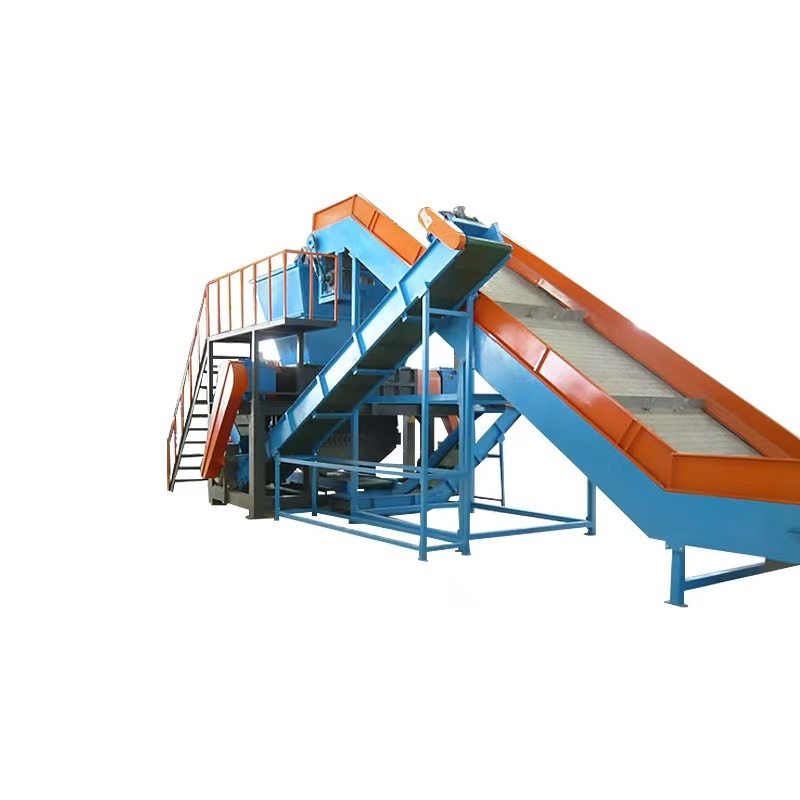
With the continuous progress of technology and the expanding market demand, waste tire recycling systems will develop in a more efficient, intelligent, and cross-border direction:
Ultra-Precision Processing and High-Value Upgrading
In the future, we will focus on breaking through nanoscale carbon black production technology, developing high-performance recycled rubber materials for electronic component packaging, high-end medical devices and other fields, further improving product added value. At the same time, we will explore the deep refining technology of tire oil to produce high-purity chemical raw materials and extend the industrial chain.
In-depth Integration of Intelligence and Digitization
Introduce artificial intelligence and big data technologies to realize intelligent monitoring, fault early warning and parameter optimization of the production process, improving equipment operation efficiency. Build a national waste tire recycling traceability platform, integrate recycling, processing, and application data, realize full-process digital management of the industrial chain, and reduce operating costs.
Cross-Border Integration to Expand Application Scenarios
Promote in-depth integration with the new energy and new materials industries, such as using recycled rubber powder to produce photovoltaic module sealing materials and wind turbine blade sheaths. Explore the new model of “recycling-processing-energy utilization”, converting thermal energy generated during pyrolysis into electrical energy for storage, realizing cascade utilization of energy.
Global Technology Export and Industrial Layout
In response to the global demand for processing 1.5 billion waste tires annually, especially in regions with severe pollution and weak technology such as Southeast Asia and Africa, we will promote China’s waste tire treatment solutions to the world through technology export, capacity building and standard promotion, helping global plastic pollution control and circular economy development.
The innovation and practice of waste tire recycling systems not only solve the worldwide problem of “black pollution” but also open up a new path of coordinated development of “resource circulation, industrial upgrading, and ecological protection”. From technological breakthroughs to achieve full-value utilization, to industrial empowerment to build a closed-loop ecosystem, and then to ecological value to help achieve dual carbon goals, this system is becoming the core force driving the development of the circular economy. In the future, with the continuous iteration of technology and in-depth integration of the industry, waste tires will completely get rid of the label of “pollution burden” and become a “black gold mine” supporting the green development of industry, providing a solid guarantee for achieving carbon peaking, carbon neutrality goals and building a beautiful China.
