How to Efficiently Separate Rubber and Steel from Used Tires?
In the tire recycling industry, how to efficiently separate rubber and steel from tires has always been a key challenge. […]
In the tire recycling industry, how to efficiently separate rubber and steel from tires has always been a key challenge. Today, we will introduce a complete solution that not only solves this problem but also significantly improves the overall efficiency of tire recycling.
1.What is a Tire Wire Separation System?
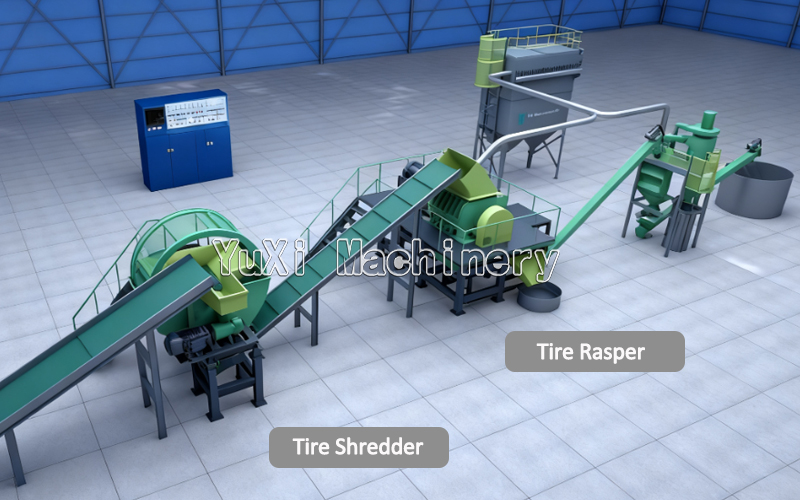
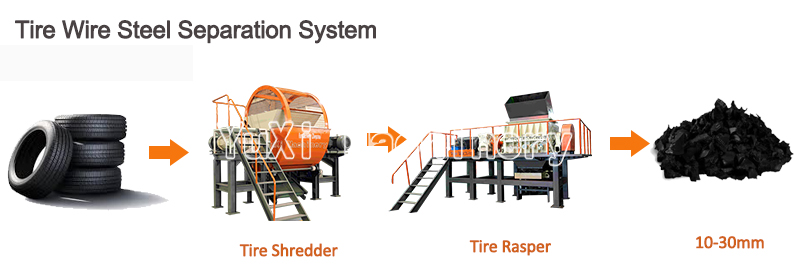
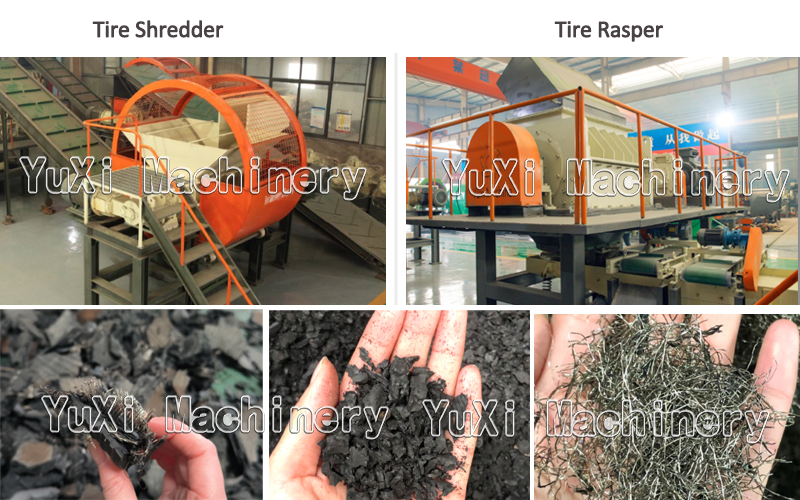
This is the core component of used tire recycling. Through the powerful crushing of the tire shredder and the efficient sorting of the tire wire separator, this system can automatically and continuously process entire used tires into high-purity steel wires and uniformly sized 30mm rubber granules, achieving complete separation and recycling of tire components (rubber and steel).
This system is robust and adaptable, capable of efficiently handling various common used tires:
Passenger car tires
Truck tires
Radial tires
Other steel-belted tires
3.Workflow: From Used Tire to High-Purity Product
The workflow of this system consists of three key steps:
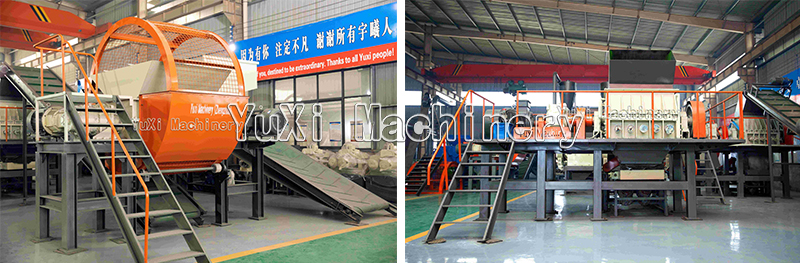
Feeding and Crushing: The entire used tire is fed into the tire shredder via a conveyor belt, where it is broken into small pieces under strong shearing force.
Preliminary Wire Separation: The crushed rubber pieces enter the tire wire separator, where the high-speed impact and friction of the tires separate most of the steel wires from the rubber.
Magnetic Separation and Purification: The separated mixture passes through a powerful magnetic separator, where the steel wires are automatically magnetically separated and collected, resulting in clean recycled steel wires.
4.System Features: Efficient, Pure, Energy-Saving
This system has three significant features:
High Separation Rate: The unique separation technology ensures a steel wire-rubber separation rate exceeding 99%, yielding high-purity, high-value products.
High-Quality Products: The rubber granules are uniformly sized (approximately 30mm) with extremely low impurity content. The steel wires are clean and can be sold directly as high-quality scrap steel.
Efficient and Energy-Saving: The scientific power configuration and streamlined process design ensure high output while maintaining low energy consumption.
5.Practical Application Cases
In practical applications, this system has proven its value in multiple recycling projects:
Case 1: After introducing this system, a tire recycling plant increased its overall processing efficiency by 35%.
Case 2: A large tire recycling enterprise increased its steel wire recovery rate by 28% after using this system.
Case 3: An environmental project significantly improved the purity and market value of rubber granules by using this system.
6.Future Development Trends
With increasing environmental requirements and technological advancements, this system is continuously evolving:
Intelligentization: Integrating AI and machine learning technologies to achieve more precise separation and equipment self-optimization.
Modularization: Adopting modular design for flexible configuration based on different processing volumes.
Automation: Integrating with other recycling equipment to achieve fully automated processes.
Customization: Providing personalized solutions based on different customer needs.
7.Selection Recommendations
When selecting this system, consider the following factors:
Processing Capacity: Choose the appropriate model based on the expected daily processing volume.
Compatibility: Ensure the system can handle the types of tires you need to process.
Maintenance Requirements: Choose a system that is easy to maintain and has readily available spare parts.
Technical Support: Ensure the supplier can provide timely technical support and training.
Get Machine Price Now
Content for Specifications.
Content for Features.
Local Office
Henan University Science and Technology Park (Western) ,