In today’s in-depth advancement of global sustainable development strategies, efficiently addressing the industry pain points of “difficult separation and low utilization” of composite waste has become a key proposition for promoting the implementation of circular economy. A composite waste sorting equipment integrating intelligent sensing, precise sorting, and green energy-saving technologies is redefining the industrial standards of solid waste resource utilization with its disruptive processing efficiency, transforming various mixed wastes from “environmental burdens” into “recycled resources” and becoming a core hub linking green production and circular utilization. Today, we will conduct an in-depth interpretation of this “hardcore equipment” driving the upgrading of the solid waste treatment industry from three dimensions: technological innovation, scenario implementation, and industrial empowerment.
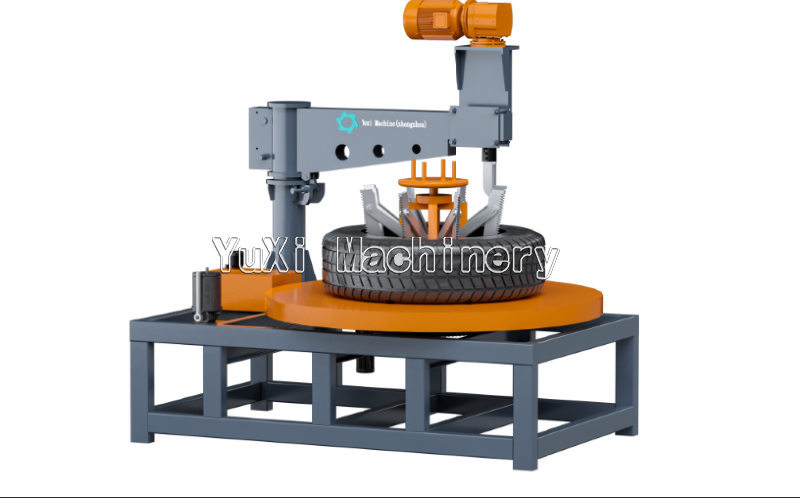
The core advantage of this composite waste sorting equipment lies in breaking the limitation of “extensive separation” of traditional sorting equipment, achieving triple breakthroughs of “precise identification, efficient sorting, and low-consumption operation” through multi-technical integration.
1.Identification Technology Precise Positioning with Multi-Dimensional Perception
The equipment is equipped with a dual system of multispectral recognition and X-ray detection, which can quickly capture the physical properties (density, conductivity, spectral reflectivity) and chemical composition of different materials. Even for mixed particles with a particle size of less than 5mm, it can achieve an identification accuracy of over 99.8%. For composite waste with complex components, the built-in AI algorithm automatically establishes a material database and continuously optimizes the recognition model through deep learning to ensure adaptability to new types of waste.
2.Sorting Structure Efficient Coordination of Modularization
Adopting a modular sorting unit design, it integrates three core technologies: air separation, electromagnetic separation, and vibration separation. Lightweight plastics are accurately separated by adjustable-speed air flow, metal impurities are adsorbed by high-frequency electromagnetic induction, and heavy particles are classified and screened by vibrating screens. Each unit is linked through an intelligent control system, which automatically switches sorting modes according to waste composition. The processing efficiency is 60% higher than that of traditional equipment, and the sorting purity is stably maintained above 99.2%. Core components are made of AISI 316L stainless steel and wear-resistant ceramic composite materials, with a service life extended to more than 8 years, far exceeding the industry average of 3-5 years.
3.Intelligent Upgrade Full-Life Cycle Green Control
Modern versions have achieved full-life cycle intelligent control: the automatic feeding system ensures uniform material distribution through weight sensing and flow control; the central control system integrates industrial Internet of Things modules to support real-time monitoring of sorting efficiency, energy consumption data, and equipment status, and can remotely adjust process parameters; the waste heat recovery device converts heat generated during equipment operation into heating or preheating energy, reducing the unit processing energy consumption to 0.8kWh/kg, with motor power ranging from 11-90kW, meeting international low-carbon equipment standards.
Its application scenarios have covered multiple industrial fields and recycling links, providing customized solutions for different types of waste treatment needs and becoming a key equipment for promoting industrial green transformation.
1.Applicable Wastes From Industrial Scrap to Domestic Solid Waste
Its processing scope covers various types of mixed wastes:
2.Process Integration Building a Closed-Loop Recycling System
In the solid waste treatment industrial chain, it is in the core link of “precision sorting”, connecting front-end crushing and back-end resource utilization:
This full process of “crushing → sorting → resource utilization” increases the resource conversion rate of mixed waste from the traditional 50% to over 97%, significantly reducing the amount of solid waste landfilling.
3.Customized Solutions Adapting to Different Scenario Needs
The value of this sorting equipment has long exceeded the scope of a “processing tool”, becoming a core support for enterprises to reduce costs, improve efficiency, and fulfill social responsibilities, and promoting the transformation of the solid waste treatment industry towards high-quality development.
1.Economic Value From Cost Center to Profit Engine
2.Ecological Value Quantified Green Contributions
3.Industrial Impact Promoting Industrial Standardization and Upgrading
Its widespread application is reshaping the pattern of the solid waste treatment industry:
Choosing the right sorting equipment requires comprehensively evaluating technology, cost, and long-term value in combination with your own needs to avoid blind investment.
1.Core Parameters Three Key Indicators
2.Technical Trends Three Development Directions
3.Investment Return Rational Calculation
Taking a piece of equipment with a daily processing capacity of 20 tons as an example:
This composite waste sorting equipment solves the industry pain points of solid waste utilization with precise technological innovation, builds an industrial bridge for resource circulation with extensive scenario applications, and promotes the implementation of green development with significant dual values. In the era of “dual carbon” goals and circular economy, investing in such an efficient and intelligent sorting equipment is not only a realistic choice for enterprises to improve competitiveness but also a strategic measure to layout the future green industry. It will help enterprises seize opportunities in the blue ocean of solid waste resource utilization and achieve a win-win situation of economic benefits and ecological responsibilities.
