In the tire recycling industry, there’s a step that’s often overlooked but critical to the efficiency and effectiveness of the […]
In the tire recycling industry, there’s a step that’s often overlooked but critical to the efficiency and effectiveness of the entire process—bead cutting. Today, we’ll take an in-depth look at a specialized piece of equipment that can significantly improve tire recycling efficiency.
I. What is a Bead Cutter?
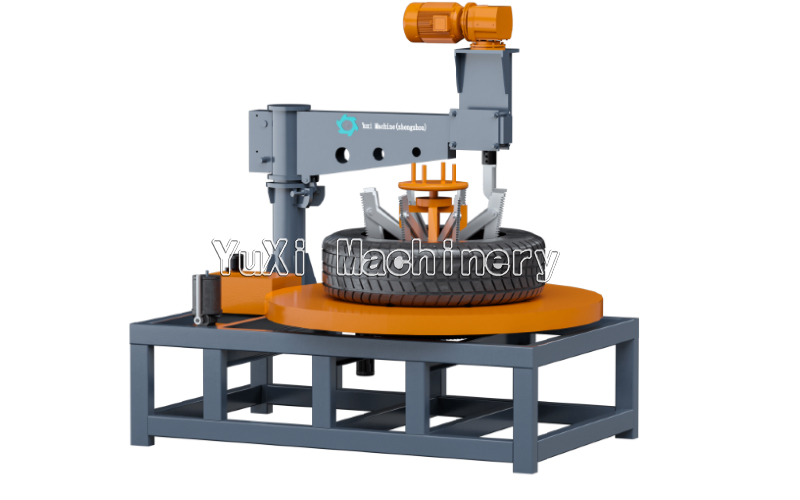
A bead cutter is a specialized piece of equipment designed for the preprocessing stage of tire recycling. It precisely cuts the high-strength steel wires at the tire bead, separating the tire from the steel wires.
This equipment solves two major challenges in tire recycling:
The problem of hard-to-handle steel wires at the tire bead
Obstacles in the subsequent shredding and rubber processing stages
II. Working Principle: From Positioning to Separation
The bead cutter’s working principle can be broken down into four key steps:
Tire Positioning: Secure the used tire to the machine’s clamping mechanism and precisely align it with the bead. This step ensures the accuracy of subsequent cutting.
Cutting Initiation: A motor drives a specialized alloy cutting blade to cut along the circumference of the bead at a constant speed. This uniform cutting ensures smooth, even cuts.
Steel Wire Separation: The cutting blade penetrates the rubber layer and cuts the steel wires at the bead, separating them from the tire body. This process requires extremely precise control of both accuracy and force.
Finished Product Discharge: After cutting is complete, the machine automatically releases the clamping mechanism. The separated tire body and steel bead are collected separately, preparing them for subsequent processing.
III. Applicable Materials: Wide Compatibility with Various Tires
This equipment can handle multiple types of tires:
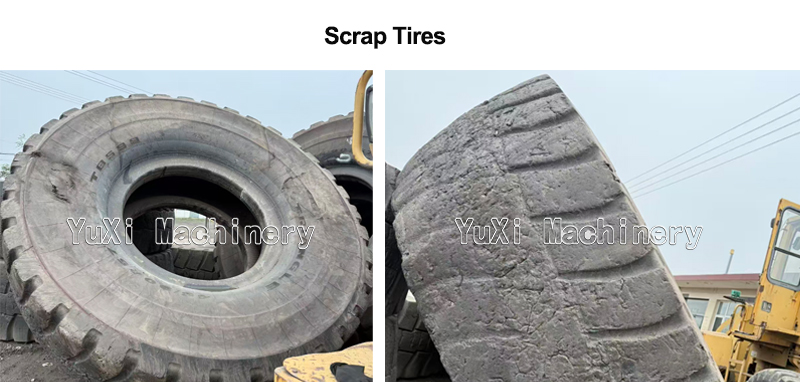
Various Used Tires: Common sizes of passenger cars, SUVs, trucks, and light truck tires
Beaded Rubber Products: Used engineering vehicle tires (small sizes), industrial rubber wheels with steel rings
IV. Advantages and Features: Efficient, Durable, Safe
Bead cutters have several significant advantages:
Precise and Efficient: With precise positioning and minimal cutting error, cutting a single tire bead takes only 1-2 minutes, far more efficient than manual operation.
Durable: The cutter is made of high-hardness alloy, resistant to wear, and can handle high-strength steel wires for extended periods, reducing equipment replacement costs.
Easy to Operate: One-button operation and safety features allow even beginners to quickly master the system, reducing operational risks.
Wide Compatibility: Adjustable clamping dimensions make it compatible with multiple tire sizes, eliminating the need for frequent mold changes and improving production flexibility.
Supports Recycling: Pre-separation of bead steel wires reduces wear on subsequent equipment, improving the efficiency of the entire recycling line and lowering overall operating costs.
V. Comparison with Other Equipment
Compared to traditional manual cutting or other types of cutting equipment, bead cutters offer clear advantages:
Higher Efficiency: Processing speed is several times that of manual operations
Lower Costs: Reduces labor costs and equipment wear
Better Results: More precise cutting and cleaner separation
Increased Safety: Reduces safety risks associated with manual operations
VI. Practical Application Cases
In real-world applications, bead cutters have proven their value in multiple recycling projects:
Case 1: After introducing a bead cutter, a tire recycling plant increased overall processing efficiency by 40%
Case 2: An engineering vehicle tire recycling company increased steel wire recovery rate by 25% after using this equipment
Case 3: An environmental project significantly reduced maintenance costs for subsequent shredding equipment by using a bead cutter
VII. Future Development Trends
With increasing environmental requirements and technological advancements, bead cutters are also continuously evolving:
Intelligentization: Integrating AI and machine learning technologies to achieve more precise cutting and equipment self-optimization
Energy Efficiency: Using more efficient motors and drive systems to reduce energy consumption
Automation: Integrating with other recycling equipment to achieve fully automated processes
Customization: Providing personalized solutions based on different customer needs
VIII. Selection Recommendations
When selecting a bead cutter, consider the following factors:
Processing Capacity: Choose the appropriate model based on expected daily processing volume
Compatibility: Ensure the equipment can handle the types of tires you need to process
Maintenance Needs: Choose equipment that’s easy to maintain with readily available spare parts
Technical Support: Ensure the supplier can provide timely technical support and training
IX. Conclusion
The bead cutter is more than just a piece of equipment—it’s an innovator in the tire recycling industry. It solves a major challenge in tire recycling, improving overall efficiency and reducing processing costs while making a positive contribution to environmental protection. As technology continues to advance, we can expect bead cutters to play an increasingly important role in tire recycling, making greater contributions to building a circular economy and promoting sustainable development.
Get Machine Price Now
Content for Specifications.
Content for Features.
Local Office
Henan University Science and Technology Park (Western) ,