The Technological Revolution in Circular Economy A Complete Solution from Separation to Regeneration
In the global wave of circular economy, the sustainable utilization of resources has become a key link in achieving green […]
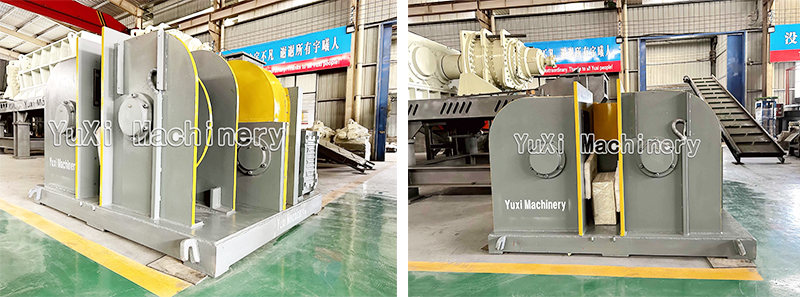
In the global wave of circular economy, the sustainable utilization of resources has become a key link in achieving green development. Within this complex industrial chain, tire wire drawing machines (double-hook wire drawing machines/tire steel wire drawing machines) are undoubtedly the core link connecting “waste” and “rebirth”. They are not only an innovation in engineering technology but also an important driving force for promoting the upgrading of the green industry. Today, we will present a complete portrait of this equipment from four dimensions: technical principles, application scenarios, economic value, and industry impact.
I. Technical Core A Precision Engineering from “Separation” to “Rebirth”
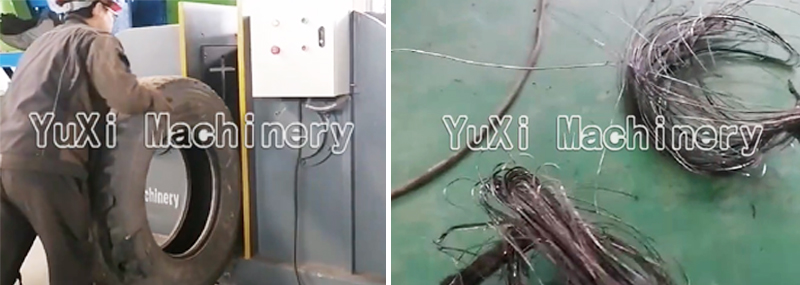
Its design concept stems from the dual pursuit of “efficiency” and “purity”. Its core function is to completely separate steel wires from rubber in the beads of waste radial tires, laying the foundation for the subsequent production of high-purity rubber powder and steel wire recycling.
1.Materials Science The Art of Separation
Tire beads are complex structures composed of high-carbon steel wires and natural rubber/synthetic rubber. To achieve perfect separation of the two, three challenges must be overcome simultaneously:
Strong Bonding: The adhesion strength between steel wires and rubber is extremely high.
Structural Toughness: Beads undergo deformation and aging after long-term use.
Component Complexity: Beads from different vehicle models and brands vary in composition and structure.
2.Mechanical Design Precision Control of Dual-Hook Coordination
At its core are two high-strength alloy steel hooks, precisely driven by a hydraulic system to achieve the operational logic of “synchronous cutting and symmetrical force application”:
Dual-Hook Coordination: Two hooks (inner and outer) cut into the bead simultaneously from both sides to ensure uniform force distribution.
Hydraulic Drive: A proportional valve-controlled hydraulic system achieves displacement accuracy at the 0.1mm level.
Intelligent Sensing: Equipped with torque sensors and position sensors to monitor the separation process in real time.
This design not only achieves a separation purity of over 99% but also controls the steel wire damage rate below 0.5%, creating optimal conditions for subsequent recycling.
3.Automation and Intelligence A Revolution in Efficiency
Modern equipment has developed a complete automated solution:
Automatic Feeding System: Cooperates with AGVs or robotic arms to realize automatic material transportation and positioning.
Intelligent Control System: Based on PLC and HMI human-machine interface, it can store more than 100 types of process parameters.
Data Traceability: Realizes equipment status monitoring and process parameter traceability through industrial Internet of Things technology.
Energy-Saving Design: Adopts servo hydraulic and frequency conversion drive, saving over 30% energy compared to traditional equipment.
II. Application Spectrum Full-Scenario Coverage from “Waste” to “Raw Material”
Its application scope is far beyond imagination. It is not only a standard configuration in recycling plants but also a hub connecting multiple industries.
1.Applicable Materials From “Whole Tires” to “Crushed Materials”
This equipment is specifically designed for “tire rings” and can efficiently process:
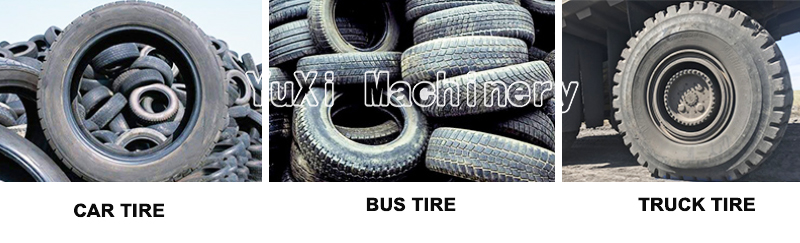
Passenger Car Beads: Waste radial tire beads from cars, SUVs, and other passenger vehicles.
Commercial Vehicle Beads: Beads from heavy-duty vehicles such as trucks and buses.
Engineering Vehicle Beads: Beads from construction machinery such as loaders and excavators.
Post-Crushing Semi-Finished Products: Tire ring materials initially processed by tire crushers.
2.Process Connection Its Position in the Recycling Industrial Chain
The equipment is usually located between the tire crushing line and the rubber powder grinding line/steel wire processing line, forming a complete process chain:
Pretreatment Process: Tire crushers crush whole tires into “tire rings”.
Core Process: The equipment separates steel wires from rubber.
Subsequent Processes:
Rubber: Enters the powder grinding system to be made into 80-200 mesh rubber powder. Steel Wires: Enter the sorting and packaging system to be recycled back to steel mills.
This full process of “crushing → separation → grinding/sorting” achieves a material recovery rate of over 95%.
3.Typical Cases Solutions for Enterprises of Different Scales
Small and Medium-Sized Recycling Centers: A single equipment with manual feeding, processing capacity of 500-1000kg/h.
Large-Scale Resource Utilization Bases: Multiple equipment connected in parallel, combined with automated conveyor lines, processing capacity of 2000-5000kg/h.
In-House Recycling at Tire Factories: Integrated at the end of tire production lines to realize real-time recycling of defective products.
III. Economic and Environmental Benefits A Dual Account of “Green + Gold”
The value of the equipment is not only reflected in technical parameters but also in the dual benefits it brings to enterprises and society.
1.Economic Benefits From Cost Center to Profit Center
Direct Income: Separated high-purity rubber powder and steel wires can be sold directly.
Cost Savings: Reduces landfill/incineration costs and lowers raw material procurement costs.
Policy Dividends: Eligible for preferential policies such as immediate refund of value-added tax for comprehensive resource utilization.
Long-Term Value: Establishes a stable “waste-raw material” supply chain to enhance risk resistance.
2.Environmental Benefits Quantified “Carbon Emission Reduction” and “Pollution Control”
Carbon Emission Reduction: Each ton of processed material can reduce CO₂ equivalent emissions by approximately 2.5 tons.
Pollution Control: Avoids soil pollution from landfilling and air pollution from incineration.
Resource Conservation: Each ton of recycled rubber can save approximately 3 tons of natural rubber and 1.5 tons of crude oil.
3.Industry Impact Promoting the Formation of “Closed-Loop Economy”
The widespread application of the equipment is reshaping the entire industrial chain:
For Manufacturers: Promotes the improvement of “green design” and “recyclability”.
For Recycling Enterprises: Raises industry access thresholds and promotes industrial agglomeration and standardization.
For Downstream Industries: Provides a stable source of raw materials for recycled rubber products and steel wire products.
For Policy-Making: Provides technical support for the implementation of policies such as the “Extended Producer Responsibility System”.
IV. Selection and Future How to Invest in the “Right” Equipment
Among numerous suppliers and models, how to choose the right equipment for your enterprise?
1.Key Selection Parameters
Processing Capacity: Select a model matching the daily processing volume to avoid “overcapacity” or “insufficient capacity”.
Separation Purity: Pay attention to the steel wire residue rate in rubber and the rubber residue rate in steel wires.
Automation Level: Choose an appropriate level of automation based on labor costs and management capabilities.
Maintenance Costs: Focus on the service life of wearing parts, spare parts supply, and after-sales service response speed.
Energy Consumption Indicators: Electricity and fuel consumption per unit of processing volume, which affect long-term operating costs.
2.Technological Development Trends
Intelligence: AI algorithms optimize the separation process, and predictive maintenance reduces downtime.
Modularization: Quickly replaceable hook systems to adapt to beads of different specifications.
Low-Carbonization: Adoption of more efficient drive systems and energy recovery technologies.
Collaboration: Seamless connection and data sharing with crushing, grinding, and other equipment.
3.Investment Return Calculation
Taking a piece of equipment with a processing capacity of 1000kg/h as an example:
Investment: Approximately 2-3 million RMB (including auxiliary equipment).
Operating Costs: Approximately 80-120 RMB/ton (including labor, energy consumption, and maintenance).
Income: Approximately 400-600 RMB/ton (sales revenue from rubber powder + steel wires).
Payback Period: Approximately 1.5-3 years (depending on raw material costs and product prices).
Conclusion A Bridge Connecting “Waste” and “Rebirth”
The equipment is not only a machine but also a materialized embodiment of the circular economy concept. It transforms “waste” into “resources”, “costs” into “profits”, and “environmental burdens” into “green assets”. Against the backdrop of the “dual carbon” goals and circular economy, investing in an efficient and intelligent piece of equipment is not only a choice for enterprises to transform and upgrade but also an investment in the future. It will help you seize opportunities in the green wave and achieve a win-win situation for the economy and the environment.
Get Machine Price Now
Content for Specifications.
Content for Features.
Local Office
Henan University Science and Technology Park (Western) ,